
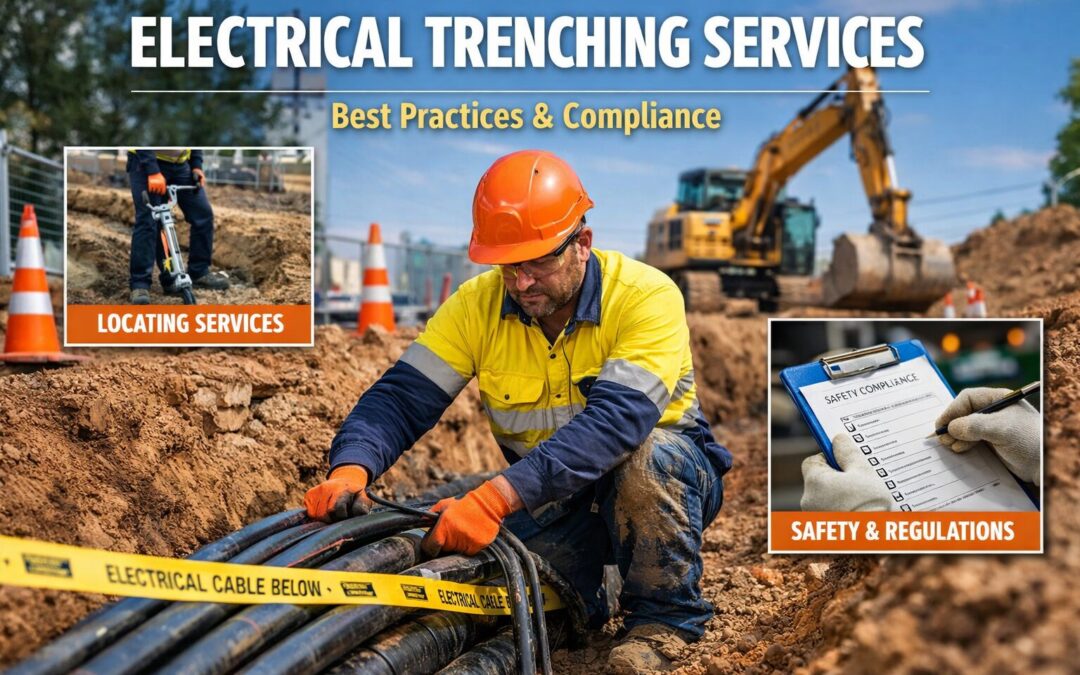
Electrical trenching services form a critical foundation for modern telecommunications and infrastructure projects. From powering 5G towers and rooftop installations to supporting in-building coverage systems and remote wireless assets, compliant trenching is essential to long-term network reliability, safety, and regulatory approval.
In Australia, electrical trenching is governed by strict work health and safety legislation, Australian Standards, and asset owner specifications. Errors during excavation or installation can result in damaged live services, safety incidents, project delays, and non-compliant assets that fail audit. For network operators, builders, and project managers, electrical trenching is not simply a civil task. It is a risk-managed, compliance-critical activity that must be executed correctly the first time.
AM2PM Group delivers electrical trenching services as part of a fully integrated telecommunications and civil construction capability, supporting complex, high-risk builds across Australia.
What Electrical Trenching Services Involve in Telecommunications Projects
Electrical trenching services involve the controlled excavation of ground to install electrical conduits, cabling, earthing systems, and associated protection infrastructure. In telecommunications environments, these trenches typically support power supply to mobile towers, equipment shelters, DAS and IBC systems, microwave installations, and network infrastructure in urban, industrial, and remote locations.
Unlike general excavation, electrical trenching must account for precise depth requirements, separation distances from other services, moisture control, and mechanical protection. Trenches must be designed and constructed to protect electrical assets for the full design life of the network, often in challenging ground conditions or live operational environments.
Telecommunications trenching frequently occurs in high-risk locations such as road corridors, rail assets, tunnels, rooftops, industrial facilities, and dense commercial precincts. These conditions increase the importance of detailed planning, competent supervision, and accurate documentation.
Planning Best Practices Before Electrical Trenching Begins
Best-practice electrical trenching starts well before excavation begins. The planning phase is where most project risk is either removed or embedded.
Service locating is the first mandatory step. Before You Dig Australia plans must be obtained, reviewed, and verified on site. In telecom projects, plans alone are rarely sufficient. Electronic locating and non-destructive excavation are often required to physically confirm the position and depth of existing services before mechanical excavation proceeds.
Trench design must align with engineering drawings, Australian Standards, and network authority requirements. This includes trench depth, conduit spacing, bedding materials, separation from other utilities, and allowance for future maintenance access. Soil conditions, drainage, and load requirements must also be assessed to prevent long-term asset damage.
A project-specific Safe Work Method Statement must be developed and approved prior to works commencing. This documentation addresses excavation collapse risk, interaction with plant and traffic, electrical hazards, emergency response, and site access controls. On high-risk telecom sites, this documentation is routinely audited by principal contractors and network owners.
Safe and Compliant Execution on Site
Execution is where experience and discipline matter most. Electrical trenching must be carried out by trained crews who understand both civil excavation risk and electrical compliance requirements.
Excavation must be controlled to avoid over-digging, unstable trench walls, and encroachment on adjacent assets. Where trenches exceed safe depth limits or ground conditions are unstable, appropriate shoring or battering methods are required to prevent collapse. Manual excavation is commonly required in proximity to live services.
Electrical conduits and cabling are installed in accordance with specified depths, separation distances, and bedding requirements. Mechanical protection and warning tape are installed to reduce future strike risk. Earthing systems are installed, tested, and recorded prior to backfilling.
Backfilling and reinstatement are treated as critical stages, not finishing tasks. Poor compaction, incorrect materials, or inadequate surface reinstatement can lead to subsidence, water ingress, and asset failure long after project handover. In public areas and live facilities, reinstatement must meet council, road authority, or asset owner specifications before sign-off.
AM2PM Group self-performs trenching, electrical installation, and reinstatement using in-house crews. This integrated delivery model removes handover risk between subcontractors and ensures full accountability from excavation through to final inspection. Electrical trenching is often delivered alongside broader civil scopes such as pit and pipe installation, enabling coordinated underground delivery. More detail on this approach can be found on the Civils and Structural Services page.
Compliance Requirements for Electrical Trenching in Australia
Electrical trenching services in Australia are regulated under work health and safety legislation, Australian Standards, and site-specific requirements imposed by asset owners and principal contractors.
Standards commonly referenced include AS/NZS 3000 for electrical installations and excavation safety guidance issued by SafeWork authorities. Additional requirements may apply for works near roads, rail corridors, or critical infrastructure.
Compliance is not limited to physical works. Regulators and clients expect contractors to demonstrate that trenching was planned, supervised, and executed under a compliant system of work. This includes service locating records, approved SWMS, inspection reports, photographic evidence, and site diaries.
Guidance on excavation safety obligations is published by SafeWork NSW and can be reviewed.
Why Integrated Electrical Trenching Contractors Reduce Risk
One of the most common causes of trenching failures is fragmented delivery. When excavation, electrical installation, and reinstatement are split across multiple subcontractors, accountability becomes unclear and defects are more likely to occur.
Integrated contractors who self-perform core works maintain control over sequencing, quality, and compliance. Issues are identified and resolved internally rather than being transferred between parties. This approach significantly reduces risk on high-value telecommunications projects where power, civil works, and commissioning are closely linked.
AM2PM Group operates under a complete control model, delivering excavation, electrical, logistics, and WHS management in-house. Electrical trenching is frequently coordinated with wireless infrastructure builds, including tower construction and upgrades.
Common Electrical Trenching Mistakes to Avoid
Electrical trenching failures often stem from underestimating complexity. Relying solely on service plans, ignoring soil conditions, or deviating from approved designs can result in service strikes or non-compliant installations.
Another frequent issue is inadequate reinstatement. Trenches that are poorly compacted or incorrectly finished often fail inspection or require costly rectification months after project completion.
Using contractors without proven telecommunications experience also increases risk. Electrical trenching for telecom infrastructure involves higher compliance expectations, tighter tolerances, and more rigorous documentation than residential or light commercial work.
Frequently Asked Questions
What depth is required for electrical trenching in Australia?
Electrical trench depth depends on voltage level, location, and asset owner requirements. Telecommunications power infrastructure typically requires deeper burial than residential services and must comply with network authority specifications.
Is non-destructive excavation required for electrical trenching?
Non-destructive excavation is commonly required near existing services to verify their location and depth before mechanical excavation proceeds.
Who is responsible for Before You Dig Australia and service locating?
The contractor performing the excavation is responsible for obtaining Before You Dig Australia plans and verifying all services on site prior to trenching.
Can electrical trenching be completed near live services?
Electrical trenching can be completed near live services when appropriate controls, trained personnel, and manual excavation methods are used.
What documentation is required for compliant trenching?
Typical documentation includes service locating records, Safe Work Method Statements, inspection reports, photographic evidence, and site diaries.
How is trench collapse risk managed?
Collapse risk is managed through trench design, ground assessment, shoring or battering where required, and strict exclusion zones.
Does AM2PM Group self-perform electrical trenching?
Yes. AM2PM Group self-performs trenching, electrical installation, and reinstatement using in-house crews.
Is trench reinstatement inspected before sign-off?
Yes. Reinstatement is often inspected by councils, asset owners, or principal contractors prior to project approval.
Can electrical trenching be coordinated with other civil works?
Yes. Integrated delivery allows electrical trenching to be coordinated with pit and pipe, civil, and structural works to reduce rework and project risk.
Electrical Trenching Services You Can Rely On
Electrical trenching services underpin the safety, reliability, and longevity of telecommunications infrastructure. When delivered correctly, trenching protects assets, workers, and project timelines while ensuring regulatory compliance.
AM2PM Group provides compliant electrical trenching services as part of a fully integrated telecommunications and civil construction capability. To discuss an upcoming project or request technical input, contact the team.